Floating Ecosystems Target the Dramatic Loss of Coastal Wetland Habitat
April 23, 2026
Biomatrix Water's Floating Ecosystems have been installed at the Southcoast Wake Park in Portsmouth, marking the beginning of an exciting collaborative project between the University of Portsmouth and Southern Water. We're delighted to see our technology at the heart of this partnership, which is breaking new ground in coastal habitat restoration.
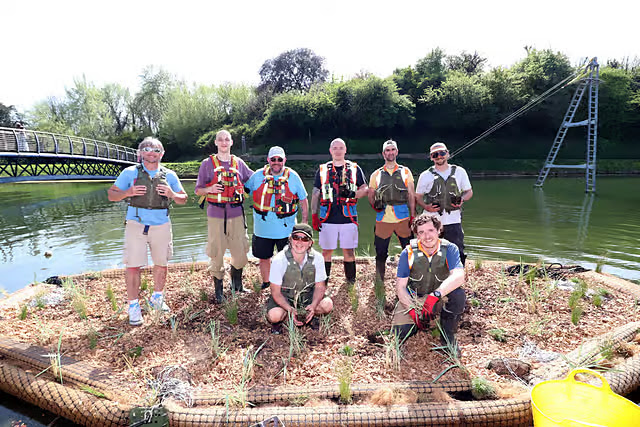
Photo Credit: University of Portsmouth
The Floating Ecosystems will support a diverse range of saltmarsh plants on the water’s surface, to recreate vital habitat in an environment that has been almost entirely given over to hard infrastructure such as seawalls and flood defences.
The scale of what has been lost makes this work all the more pressing. Over the past half century, more than 85% of the UK’s coastal vegetation — saltmarsh, seagrass, kelp — has disappeared. Where living habitat once filtered water, sheltered juvenile fish and sequestered carbon, there is now largely concrete. Biomatrix Water’s Floating Ecosystems are designed to reintroduce what’s been lost, even where the original conditions for natural regeneration no longer exist
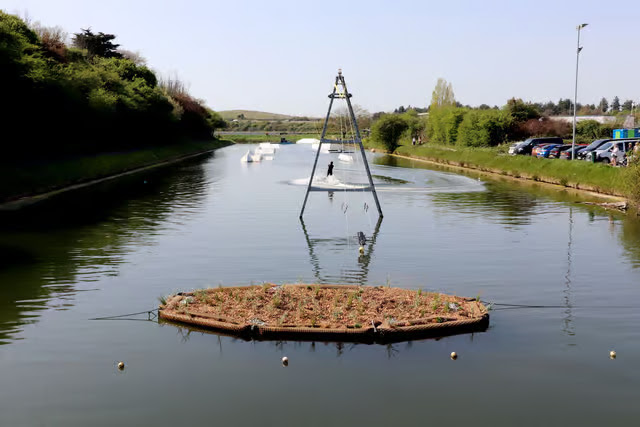
Photo Credit: University of Portsmouth
The Portsmouth installation will be monitored over the long term using a before-and-after framework. Researchers will track water quality, species diversity and ecosystem resilience, using environmental DNA (eDNA) sequencing to build a detailed picture of biological change — from microbial communities through to fish and invertebrates. eDNA analysis will also help identify the sources of bacteriological contamination, whether from human, bird or livestock origin, feeding directly into Southern Water’s work on shellfish safety and bathing water quality.
Watch a Video About this Project on Portsmouth News
The environmental benefits the Floating Ecosystems are designed to deliver are layered: improved water quality through nutrient and pollutant uptake, support for both aquatic species and terrestrial pollinators, contribution to carbon capture, and a measurable boost to biodiversity. The systems also offer a potential tool for addressing the downstream effects of urbanisation — nutrient runoff and storm overflow impacts among them.

Photo Credit: University of Portsmouth
“This collaboration demonstrates how innovation and partnership can help tackle some of the most pressing environmental challenges. Floating wetlands offer a promising, nature-based solution to improving water quality and enhancing biodiversity in coastal and urban environments.”
Project Lead
University of Portsmouth’s Institute of Marine Sciences
At Biomatrix Water, we share that view entirely. This coastal saltmarsh application is one of the most challenging and exciting deployments of our Floating Ecosystems to date, and we look forward to seeing what the long-term research reveals about its potential.
The ambition doesn’t stop at Portsmouth. Joff Edevane, environment and water quality lead for Southern Water, sees successful results here opening the door to widespread deployment across the UK, in both marine and freshwater settings — including sites targeted by the Three Harbours project in the Solent, where the pressures of habitat loss, pollution and climate change are acutely felt.
“This is a wonderful opportunity to pilot a floating wetlands approach to improving water quality and providing Natural Capital…The vision is to use this nature-based solution in protected areas in the future.”
Joff Edevane
Environment and Water Quality Lead Southern Water
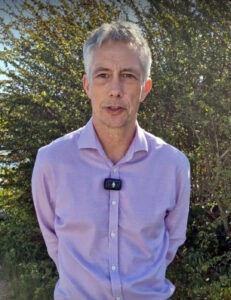
Photo Credit: University of Portsmouth
With coastal ecosystem services estimated to contribute £211 billion annually to the UK economy, the case for scaling up this kind of nature-based restoration has never been stronger — and we’re proud that Biomatrix Water’s Floating Ecosystems are helping to lead the way.