Floating salt marsh restores critical estuarine habitat to Fort Point Channel, Boston
June 9, 2026
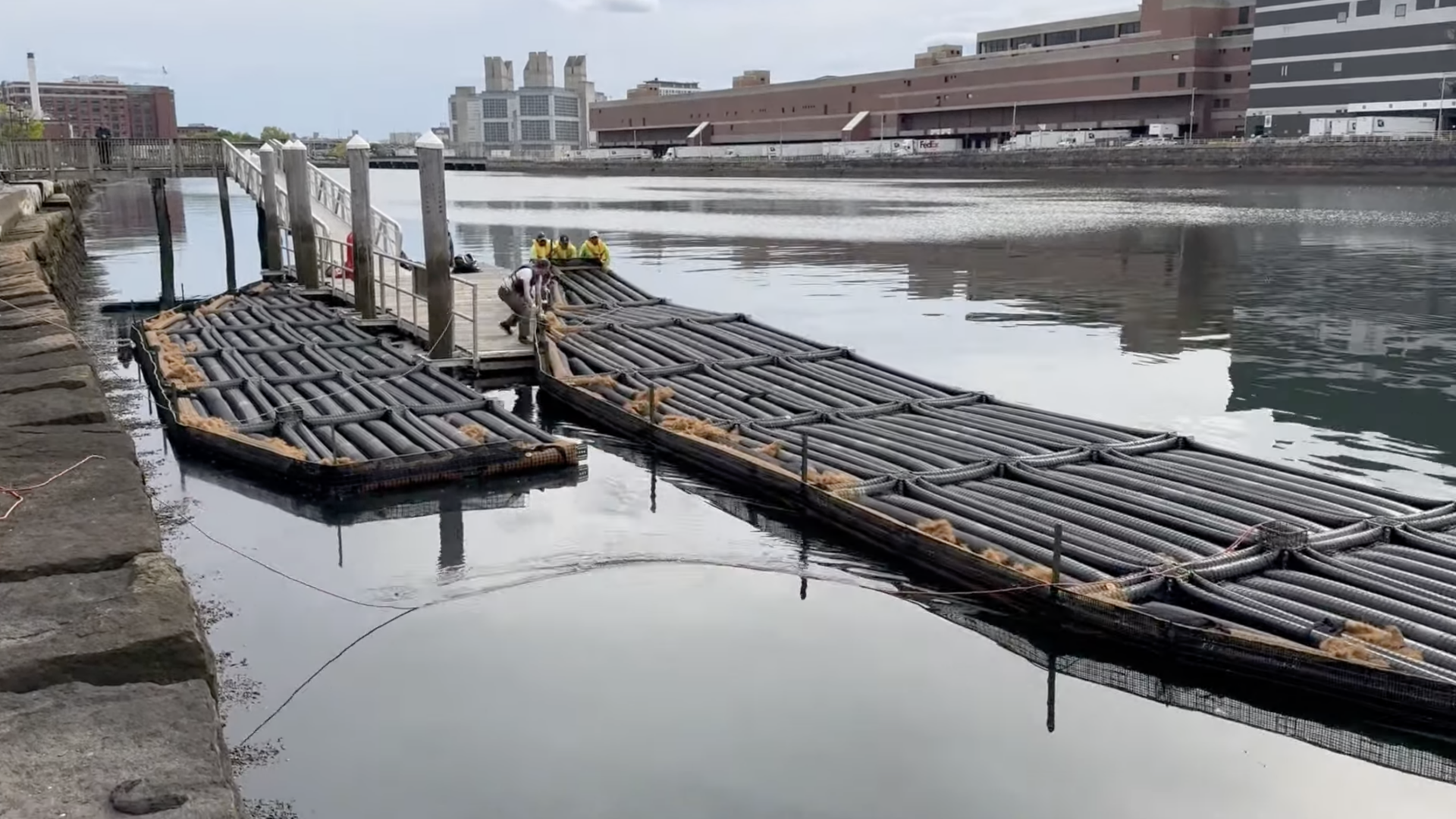
Over 1400 square feet of floating salt marsh has been installed in Fort Point Channel, Boston, creating an oasis of estuarine habitat within the urban landscape.
Above water, the island was planted with over 1600 native salt-tolerant plants spanning 15 species, including several varieties of cord grass (Spartina), sea lavender (Limonium vulgare) and coastal goldenrod (Solidago sempervirens).
Below the waterline, a number of sculptural reef habitats (Shelter Shells) hang from the access pier, recreating complex habitat texture by providing nooks and crannies to shelter marine invertebrates and small fish, whilst retaining water at low tide to create predator proof micro habitats.

The installation utilises Biomatrix Water’s Natural Matrix 100 Design, which incorporates a planting substrate engineered to biomimic salt marsh conditions, creating a seasonally dynamic natural habitat for plants, pollinators, invertebrates, fish and birds, whilst promoting nature connection and observation for residents and visitors.
The first of its kind in the region, this pioneering project will help to bring new expertise and learning with regards to plant selection and design to this important field of ecological restoration. Over the coming months, the ecosystem will be observed as it becomes established and naturally self-selects for plant species viability.
“We were delighted to collaborate with Biomatrix to bring the floating salt marsh to the Fort Point Channel and look forward to seeing it grow and develop as it becomes more established in the water. Salt marsh habitats are of key ecological importance within the Boston area and we are delighted to be able to work with our project partners to pioneer new approaches that bring salt marsh ecologies to into the heart of our city.”
Michelle Lower, Owner Project Manager
“We’re delighted that Save the Harbor/Save the Bay can participate in this important project, pioneering new approaches to bring life to our precious harbor and rare ecosystems. Both floating and submerged habitats provide contemporary tools to bring nature back to the harbor and bay environment.”
Chris Mancini, Executive Director, Save the Harbor/Save the Bay
With thanks to our delivery partners Urban Rivers, Save the Harbor/Save the Bay, C.White Marine, Leahy Landscaping and Childs Engineering.